Time Controls for Memory
This Week in Hashcards App
A weekly look at what’s new in Hashcards app; the design decisions, the tradeoffs, and what actually changed. Until now the review schedule only played in one direction, at one speed. This week it gets transport controls: lighten a heavy day, pull tomorrow’s reviews into today before an exam, take days off without a pile-up when you’re back, or replay your whole review history through FSRS for a fresh schedule.
Updated September 2026. The four tools first shipped as a sheet of rows. They now live on one Schedule screen built around a calendar that previews every change before you confirm. Screenshots and names below are from the current release.
The Schedule Screen
One screen for everything that moves cards in time. The calendar shows how many cards land on each day of the coming weeks; below it sit four tools — Lighten, Study ahead, Days off and Rebuild — each with a live count of the cards it can act on. Pick one and the calendar redraws to show the result before anything is written, with today’s count as a before → after.
You’ll mostly arrive from the Learn tab. On a day with more than double your usual load, a small hint appears above the queue and opens the screen with Lighten already selected.
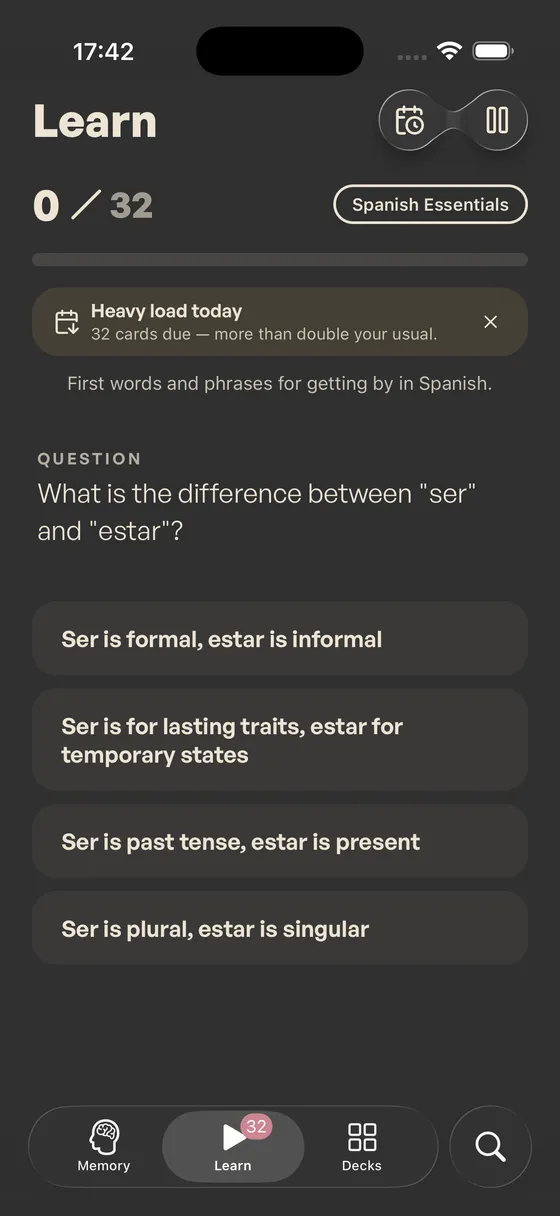
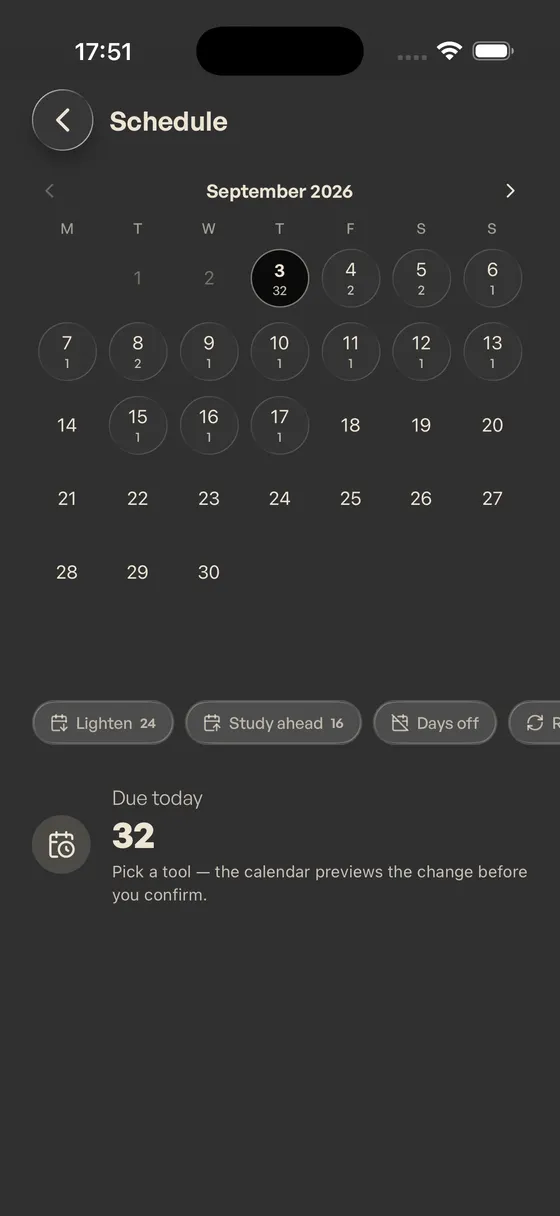
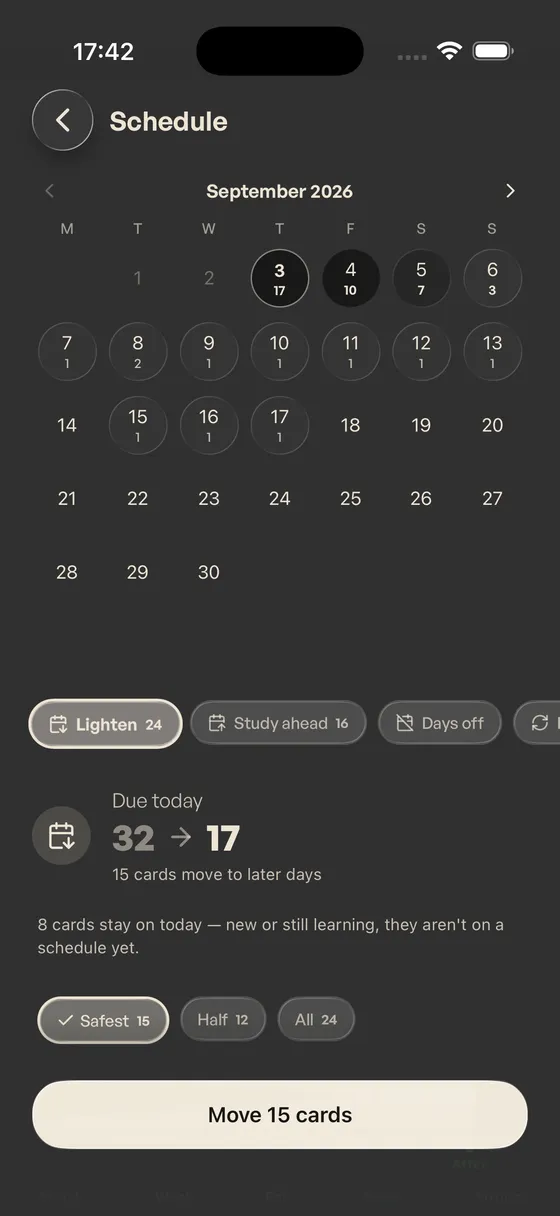
From the Learn hint to a previewed change — nothing is written yet
Lighten & Study ahead
Lighten moves cards that are due today to later days. Study ahead does the opposite: it pulls cards that aren’t due yet into today, which helps when a test is coming and waiting isn’t an option.
Neither asks you to type a number. There are three choices — Safest, Half, or All — and the panel shows what each one would do to your memory before anything happens. Not all cards cost the same to move, so the ones that can move almost for free go first. The ordering comes from the FSRS-Helper project, the same logic Anki users rely on.
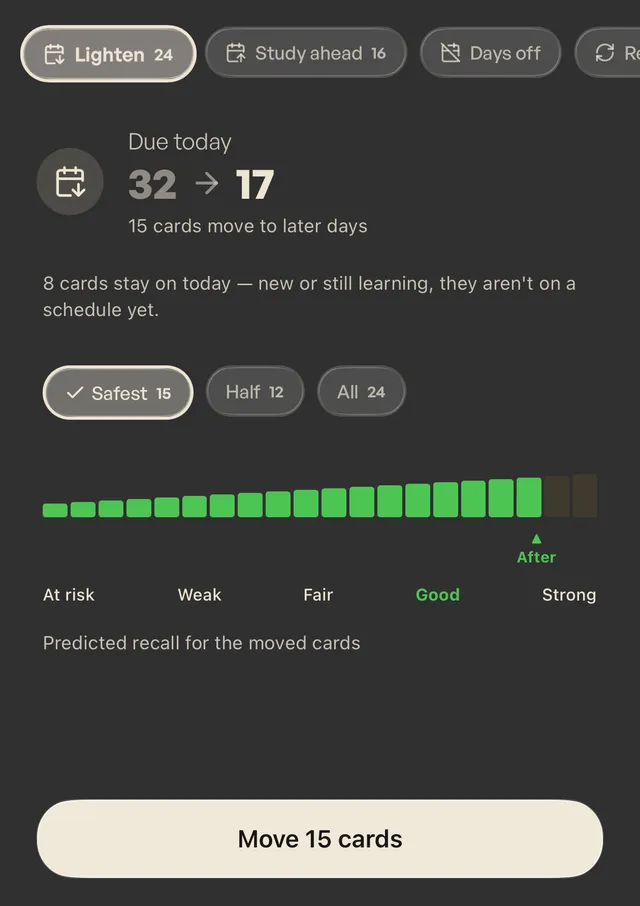
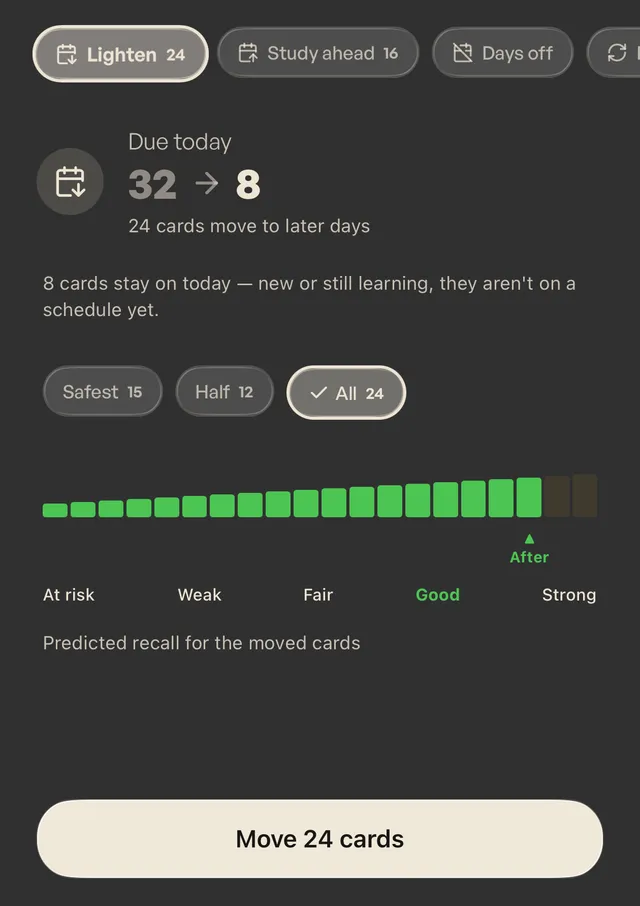
Lighten — pick a size, see the recall cost, confirm
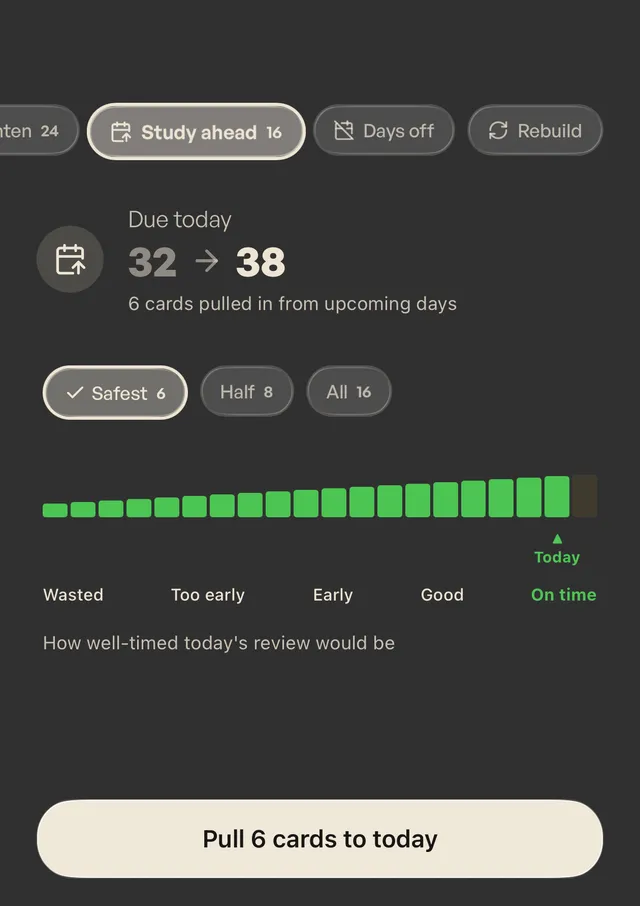
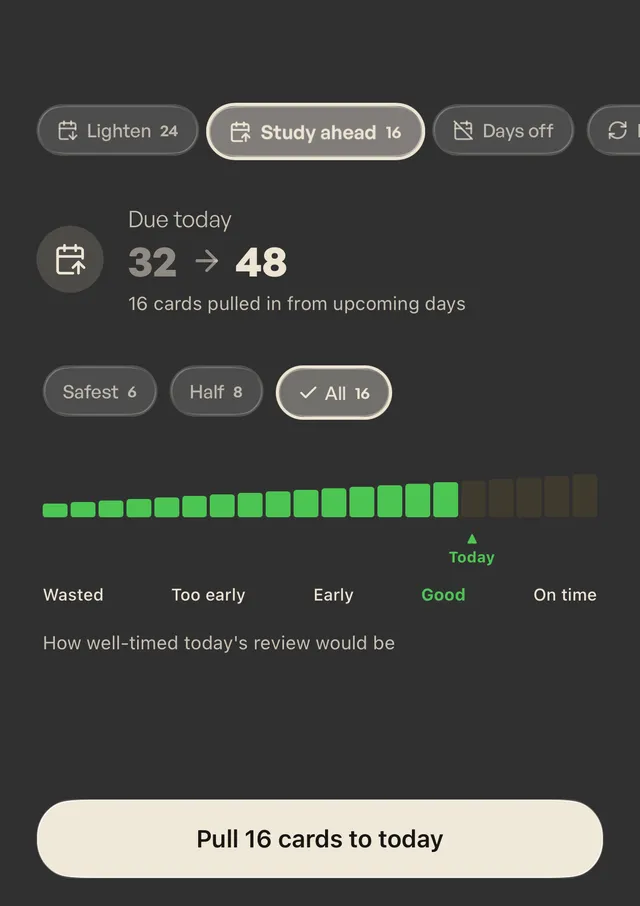
Study ahead — pull future cards in, watch the timing
Days off
Tap your first day off on the calendar, then your last. Every card that would land in that window moves to the days after you return — spread over 3, 7 or 14 days so no single day gets buried, each card placed as close to its original date as possible. If the break starts today, the overdue backlog is swept along too, so you leave with a clean slate.
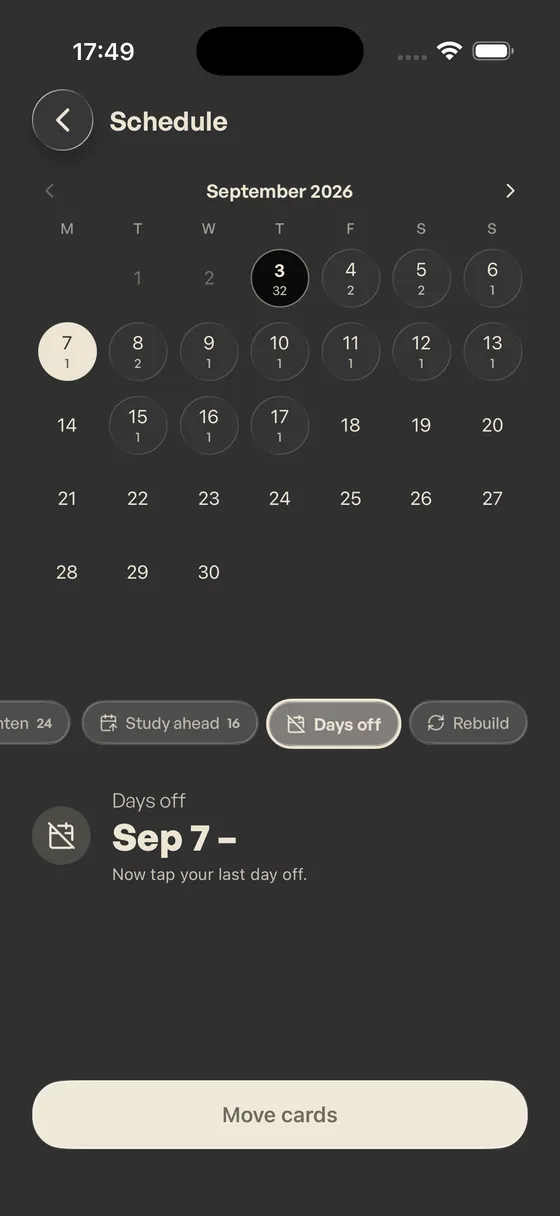
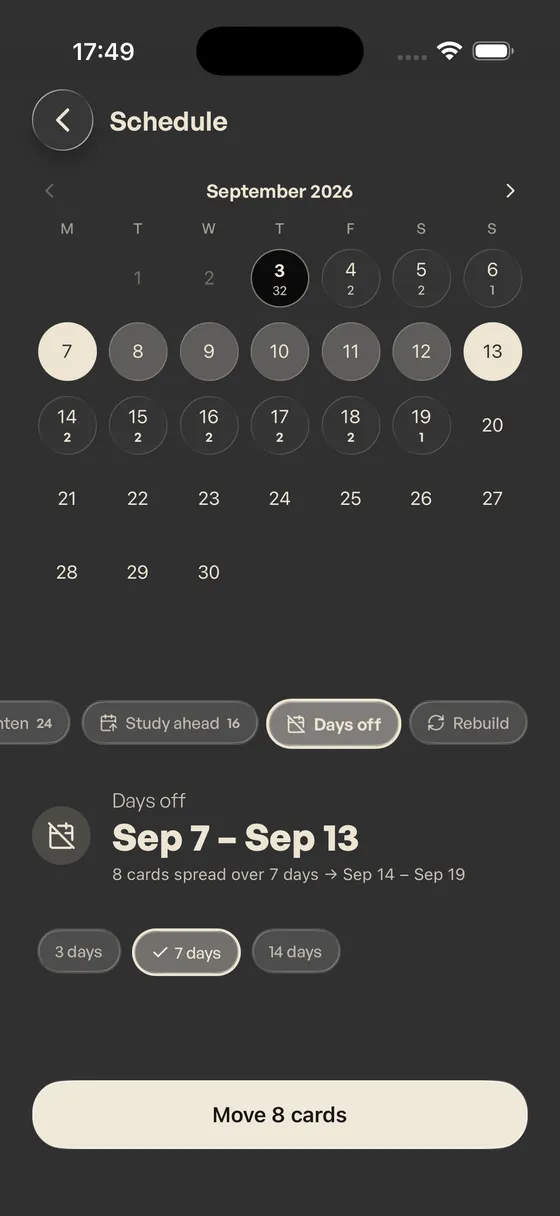
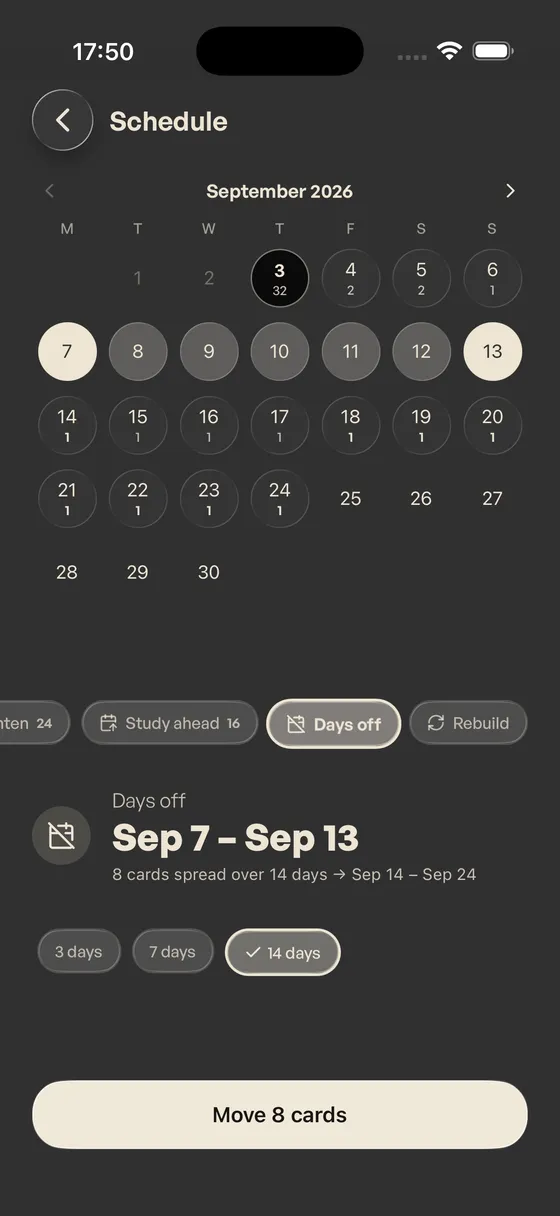
Days off — pause without the pile-up
Rebuild
The escape hatch. Rebuild replays your entire review history through FSRS and recalculates every due date from scratch — the same native reschedule that powers the desktop FSRS ecosystem. Changed your mind after lightening too much? This puts every card back where your actual history says it belongs. It only writes the cards whose dates actually change, and the calendar shows the new spread before you confirm.
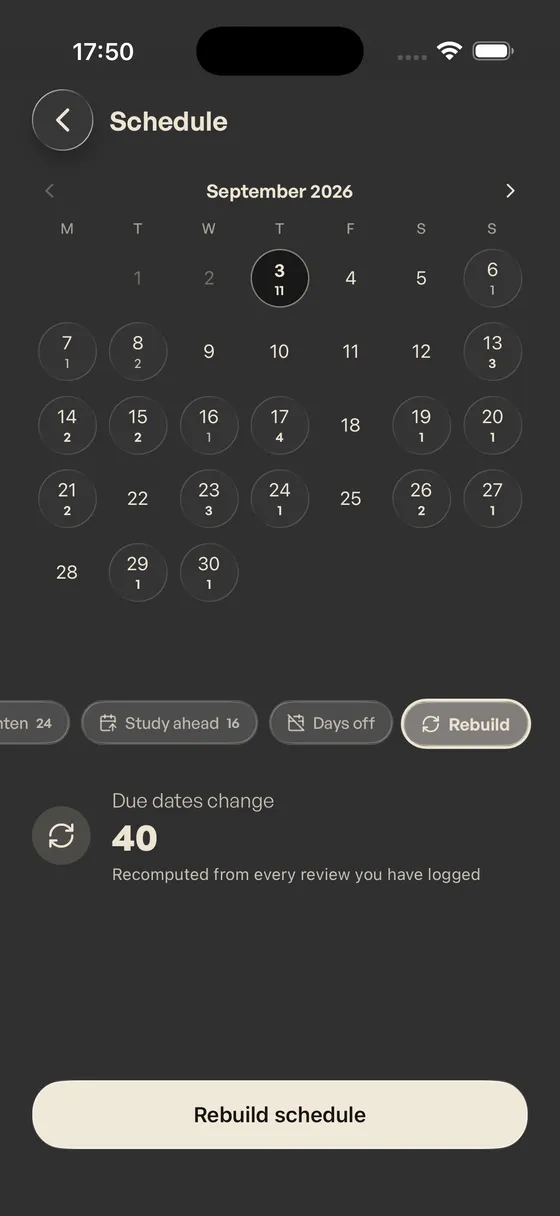
Rebuild — every due date, recomputed from history
All four tools act on scheduled cards only. New cards, and cards still in their learning steps, have no date to move — the panel counts them so you know why today didn’t drop to zero.
Also This Week
- Answer Challenge — optional multiple-choice check before grading, so you verify recall instead of just nodding along.
- Search tab — a native search tab for finding any card or deck instantly.
- Profile, reorganized — one calm hub with your account up top and four categories (Study, AI & Usage, Data & Backup, Feedback) instead of a wall of settings.
- Design polish — refreshed tokens, a single rotating state badge on deck rows instead of stacked chips, and one shared shimmer treatment for hero buttons.
Try This Week
-
Before your next weekend off, open Schedule and pick Days off on the calendar — come back to a spread-out queue instead of a wall of overdue cards.
-
On a heavy day, tap the hint above your queue and try Lighten → Safest. Watch the recall marker: moving the right cards costs almost nothing.
What’s Next
At Hashcards app, the focus is to stay up to date with FSRS improvements, and make every addition intuitive for mobile users. The following is what’s planned next. Some will take time, as getting the details right while keeping things simple takes iteration.
-
Easy Days — lighter load on the days you pick, using each card’s fuzz range.
-
Load Balance — evenly distributed daily reviews when rescheduling.
-
Disperse Siblings — spread cards generated from the same note apart, so they stop reminding you of each other.
-
Flatten — cap future reviews per day and spread the overflow forward.
-
Hashcards web app — the same decks, schedule and memory stats in the browser, in sync with your phone.
Hashcards: Knowledge that stays. Build cards. Then remember them.